
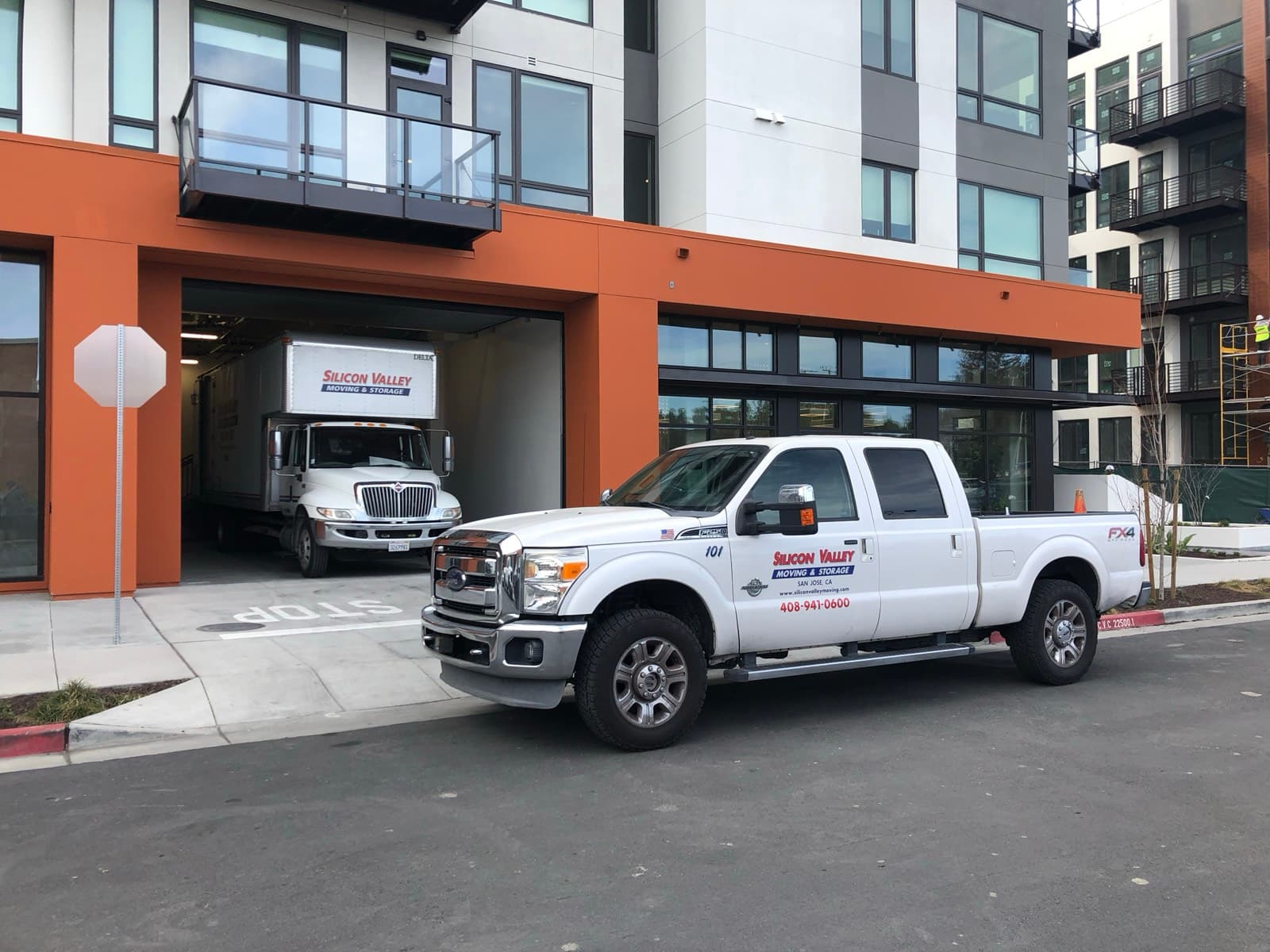
An apartment move in San Jose is a different animal from a single- family-home move. There's no driveway to back the truck into. The elevator isn't yours. It belongs to a building manager who decides when you can use it. The hallways are shared, the parking is metered, and the property manager won't let your crew through the door without a Certificate of Insurance on file. Skip any one of these steps and your move day stops cold.
We've been doing apartment and condo moves across San Jose, Santana Row, downtown high-rises, North San Jose tech-corridor complexes, and Willow Glen four-plexes since 1990. This guide is the version we wish every customer had read before they called us: what your building actually requires, how the San Jose tow-away parking permit really works, what a Certificate of Insurance is and why your mover needs to issue one, and the specific 4-week timeline that keeps an apartment move from becoming a 12-hour ordeal.
The four building rules that determine your move day
Almost every multi-unit building in San Jose enforces some version of four standard rules. The specifics vary (a 6-unit Willow Glen flat will be looser than The 88 downtown), but the categories are universal. You need to know what your building requires for each before you book a moving date.
| Rule | What it usually requires | Lead time |
|---|---|---|
| Certificate of Insurance (COI) | Your moving company sends proof of liability insurance to the property manager, often listing the building owner as additional insured | 3–7 days before move |
| Elevator reservation | A specific 2-, 4-, or 6-hour window. Often only 1 elevator is allowed, and only off-peak hours. | 2–4 weeks ahead |
| Loading dock or staging access | Approved entry point for the truck: sometimes a dock, sometimes a service entrance, sometimes a designated curb spot | Confirm at booking |
| Common-area protection | Floor runners, Masonite panels, padded door jambs, corner guards through every shared space the crew uses | Mover provides |
Certificate of Insurance: what it is and why it stops moves
A Certificate of Insurance (almost everyone in the industry just calls it a COI) is a one-page document from your mover's insurance carrier proving that the moving company carries general liability coverage and (usually) workers' compensation. Building management requires it because if your mover scrapes the elevator wall, drops a box on a neighbor's foot, or damages the lobby floor, the building wants to file a claim against the mover's insurance, not eat the loss themselves.
Most San Jose high-rises and managed apartment complexes require:
- General liability coverage of at least $1,000,000 per occurrence
- The building owner and management company listed as additional insured
- The COI on file with management 3–7 days before move day
Your mover should issue COIs as a routine part of the coordination process. Silicon Valley Moving & Storage carries the coverage required by virtually every Bay Area building, and we send COIs directly to your property manager. You forward us the manager's email at booking and it's handled. If a moving company tells you they don't issue COIs or charges extra for them, that's a red flag. They probably aren't carrying the right coverage to begin with, and your building won't let them in the door.
Elevator reservations: the most common move-day disaster
The single most common reason apartment moves blow past their estimated time is elevator scheduling. Most San Jose buildings only let you use one elevator for moving (so the other one is free for residents), and they often restrict moves to weekday daytime hours when other residents are at work. At a high-rise like The 88, Axis, Centerra, or one of the Santana Row residences, slots fill weeks ahead, especially around month-end when leases turn over.
When you call the building to reserve, get answers to all of these:
- Which days and time windows are moves allowed?
- How long can you hold the elevator? (Most are 2 or 4 hours)
- Is the freight elevator different from the passenger elevator? Which can the crew use?
- Is there a security deposit or move-in fee? (Common in the $200–$500 range, often refundable)
- What's the procedure if your move runs long?
- Is there a service entrance the crew should use instead of the lobby?
Once you have your window, share it with your mover the same day. Crews schedule around your elevator slot, not the other way around. If your slot is 9 AM to 1 PM and your apartment is a 2-bedroom on the 14th floor, the crew arrives at 8:30 to stage equipment, lay protection, and start loading the moment the slot opens.
Parking the truck: the San Jose-specific part
Where the truck actually parks is the part most people don't think about until move week. There are basically four scenarios:
Scenario 1: The building has a loading dock or service area
Best case. The building tells you where to back the truck in, and the crew shuttles items between the dock and the elevator. Confirm two things: the dock's height clearance (some are too low for a standard 26-foot moving truck. Bekins agent trucks commonly run 26' or 28' box length and ~13' overall height) and whether the dock is reserved for your time window or first-come-first-served.
Scenario 2: Underground garage only
Common at downtown San Jose high-rises and at newer complexes in North San Jose and Santana Row. Underground garages typically have 7' to 8' clearance, which means a moving truck physically cannot enter. The solution is a shuttle: the big truck parks at street level, and the crew uses smaller vehicles or hand trucks to ferry items into the garage and up the elevator. Shuttle service costs more (it's an extra crew member and additional time) and you should ask your mover to quote it explicitly if your building requires it.
Scenario 3: Street parking only
This is where the San Jose tow-away parking permit comes in. For any move where the truck has to park on a public street (in front of a duplex, fourplex, condo without a designated loading area, or older Willow Glen / Rose Garden building), you can apply to the City of San José Department of Transportation to reserve curb space.
The basics:
- Apply through the City: Tow-Away and Transportation permit applications are sent by email to dotpermits@sanjoseca.gov, or you can call (408) 535-3850 with questions about your specific address.
- Lead time: The City strongly recommends submitting tow-away permit applications at least two weeks in advance. Closer to summer move season (June–August), longer is safer.
- What you get: Posted "No Parking, Tow Away" signs on your reserved section of curb. If a vehicle ignores the signs and parks there, you have authority to have it towed.
- Watch yellow curbs: A yellow-painted curb means no stopping, standing, or parking from 6 AM to 6 PM except for active loading and unloading. You don't need a permit to use a yellow loading zone for active loading, but you can't reserve it for the day or block it for hours of staging.
Some movers, including SVM, will help coordinate the permit application as part of the move-planning process. Others expect you to handle it. Ask at booking, not the day before.
Scenario 4: Driveway or designated visitor parking
Smaller properties (duplexes, fourplexes, garden apartments) sometimes have shared driveway space the crew can use without a permit. Confirm with the property manager (and your neighbors) that the truck can occupy the space for the duration of your move. A 2-bedroom apartment usually loads in 3–6 hours of truck time depending on stairs, elevator, and distance to the unit.
Moving prep: the 4-week countdown for an apartment move
| When | What to do |
|---|---|
| 4 weeks out | Get 2–3 in-home or video estimates. Ask each mover whether they handle COIs and parking permits. Reserve elevator with building management. |
| 3 weeks out | Book your mover. Send your building's COI requirements to the moving company. Submit San Jose tow-away permit application if street parking is needed. |
| 2 weeks out | Confirm elevator reservation in writing with management. Confirm dock or staging access. Notify upstairs and downstairs neighbors of your move date and time window. |
| 1 week out | Verify COI is on file with management. Verify parking signs will be posted. Schedule utilities (PG&E, internet, water) shutoff for the day after your move. Set USPS mail forwarding. |
| Move day | Be at the apartment 30 min before the elevator window opens. Have all "do not pack" items (medications, jewelry, documents, valuables) physically separated. Tip 15–20% of total bill if you're happy with the crew. |
For a deeper version of this timeline applied to all kinds of San Jose moves (house, apartment, downsize), our complete San Jose moving checklist has the week-by-week version. And if you want a rough sense of what an apartment move actually costs in 2026, our cost-of-moving guide breaks down hourly rates and the most common up-charges.
The five mistakes we see most often
- Booking the mover before checking the elevator. Your move date should match your elevator availability, not the other way around. Reserve the elevator first, then book the mover for that exact window.
- Assuming the mover knows about every building rule. Your mover has been to a thousand buildings. They have not been to your building. Send them the property manager's email, the building's move-in policy PDF, and the dock/parking instructions in advance.
- Not factoring in stair carries. If your unit is on the 2nd or 3rd floor of a building without an elevator (common in older Willow Glen, Rose Garden, and Naglee Park flats), the move will take significantly longer and your estimate should reflect that. Tell your estimator on the survey, not the morning of.
- Skipping the COI confirmation. Don't assume the building got the COI just because the mover sent it. Email the property manager 3 days before move day and ask them to confirm receipt. We've watched moves get canceled at the lobby because a busy management office never opened the attachment.
- Trying to do a Friday-afternoon end-of-month move. The last weekend of the month, especially in summer, is the single hardest time to coordinate an apartment move in San Jose. Building elevators are double-booked, mover schedules are stuffed, and parking is impossible. If you have any flexibility, a Tuesday or Wednesday mid-month is dramatically easier.
What to ask your mover before you book
For any apartment or condo move in San Jose, the right questions on the booking call separate movers who do this weekly from movers who don't:
- Do you issue COIs at no extra charge, and what coverage limits do you carry?
- How do you handle buildings that require shuttle service from street to underground garage?
- Will you help with the City of San José tow-away parking permit?
- What's your protocol if the elevator gets stuck or the building delays the start of our window?
- Do you carry floor runners, Masonite, and corner guards on every truck, or do they cost extra?
- Will the same crew that surveyed the apartment be the crew that loads it?
For most San Jose apartment moves, our local moving service is what you want: hourly pricing, full crew, complete with building protection and COI included. If you want the crew to handle packing as well, our packing service adds 1–2 days of pack-out before the move so the actual move day is faster and cheaper. You can request a free quote with no obligation, and we'll handle the COI, the building coordination, and the permit.
Sources cited in this article include the City of San José Department of Transportation (parking permits), San Jose Code of Ordinances Chapters 11.36 and 11.48 (street parking regulation), and industry guidance from FMCSA and major California van line agents on apartment / high-rise move requirements. SVM operating credentials (USDOT 1962166, interstate USDOT 70719, CAL T 188960, Bekins Van Lines agency since 1990) are publicly verifiable through FMCSA SAFER, the California Bureau of Household Goods and Services, and Bekins.